West Virginia-based CMI2 supports Army innovation program advancing Soldier innovation, readiness, and lethality
WASHINGTON, D.C. — A program led by the Civil Military Innovation Institute (CMI2) was highlighted during the United States Senate Committee on Appropriations Defense Subcommittee hearing on the Fiscal Year 2027 defense budget held May 19, 2026.
U.S. Senator Shelley Moore Capito (R-W.Va.), a leader on the Senate Appropriations Committee, participated in the hearing alongside Secretary of the Army Daniel P. Driscoll and Acting Chief of Staff of the Army General Christopher C. LaNeve.
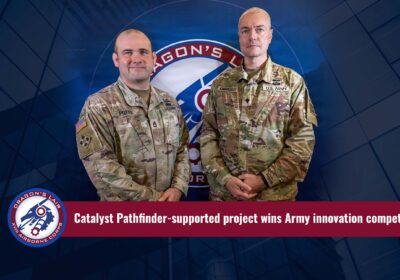
The Catalyst Pathfinder program is a collaboration between the U.S. Army Combat Capabilities Development Command (DEVCOM) Army Research Laboratory, CMI2 and Acme General Corp. The initiative is designed to accelerate Soldier readiness and capability development through operational problem sourcing, rapid experimentation, and field-driven solution development that enhances lethality and readiness for warfighters.
“Catalyst Pathfinder is proving that the best innovations often come directly from Soldiers closest to the mission,” said Zenovy Wowczuk, Founder, CMI2. “We’re proud to work alongside DEVCOM Army Research Laboratory, to help accelerate actual solutions that strengthen readiness, adaptability, lethality, and ultimately, battlefield effectiveness for the modern warfighter.”
During the hearing, Senator Capito questioned Army leadership about continued investment in Soldier-driven innovation and the Department’s priorities for rapidly developing and fielding new technologies to warfighters through Catalyst Pathfinder, led by her home state of West Virginia.
Acting Chief of Staff of the Army General Christopher C. LaNeve emphasized the Army’s focus on rapid modernization and iterative capability development driven directly by operational feedback from Soldiers, noting that Senator Capito would be “very happy” with her Army.
“We’re taking the lessons learned, not only from Ukraine, we are taking the lessons learned on the current battlefield and we are incorporating those as fast as we can,” General LaNeve said.
In her questioning of Secretary Driscoll, Senator Capito noted that the “Catalyst Pathfinder program where from the bottom up, so to speak, any innovative solutions can be created by the users of the technology or the users of the warfare. Soldiers always have really good ideas.”
Secretary Driscoll reinforced the importance of Soldier-centered experimentation and innovation ecosystems such as Driving Innovation Research and Technology (DIRT) Labs through the Catalyst-Pathfinder program during the hearing.
“This is the future of how we are going to learn the most — from our Soldiers,” he said. “I would bet on the American Soldier every single time innovating us to the most successful outcome.”
The Catalyst Pathfinder program connects Soldiers, industry, academia, and defense innovators to rapidly source, prototype and evaluate emerging technologies in realistic operational environments. Recent R&D/experimentation efforts conducted through Catalyst-Pathfinder and DIRT Labs have demonstrated accelerated timelines for capability adaptation in areas including autonomous systems, electronic warfare, additive manufacturing, tactical networking, and counter-UAS technologies.
Additional discussion led by Senator Capito during the hearing may be viewed here: https://youtu.be/PZGT304212g?si=hn9rpX4zwBy0nc5V